|
|
 |
WELCOME
Welcome
to the premier issue of Tri-Star
Times, Tri-Star Industries' newsletter.
Our purpose in producing it is to strengthen
communications with our customers. Through
it, we plan to acquaint you with key members
of our staff, introduce new products and keep
you informed of industry trends. From time
to time, we will also include technical information
on choosing and installing threaded inserts,
as well as “case history” articles
on customers’ applications.
Since Tri-Star
Times is edited for you,
the reader, we welcome your comments on
this first issue, as well as your suggestions
for future articles. We look forward to
hearing from you! |
|
|
|
 |
 |
Each
installation method for threaded inserts has some
advantages and disadvantages. Ultrasonics is faster
than thermal insertion, but it is also loud, and
you are limited on the number of inserts that can
be installed in one cycle. Cold pressing, while fast
and economical, induces more hoop stress on the plastic
and has reduced holding values.
From
a design standpoint, determining the best installation
method will include a variety of factors:
1.
The type of plastic
2. What methods can be used with the plastic
3. The size of the insert
4. The quantity of inserts being installed
5. Application requirements relating to strength
6. Economics of one process over another
7. Whether the molder can facilitate the chosen installation method
Most
molders generally prefer to install inserts after
the part is molded, for the following reasons:
• Longer
open press times slow down cycles
• Loose inserts can damage the mold
• Sink marks
• Safety issues
• Scrap/regrind issues
• Plastic in threads
• Molded-in inserts are more expensive
Most
molders choose ultrasonic and thermal methods of
installation. These techniques provide the best holding
strengths for post-molded inserts. Companies that
perform assembly of plastics will normally have this
type of equipment available in their facility.
|
During
both ultrasonic and thermal insertion, your objective
should be to ensure a good flow of plastic in
and around the knurls and serrations of the insert
and minimal flash out the top (See Figure 1,
left). The insert should be flush to .005” (0.13mm)
above. This flow provides for the strongest bond
of the insert into the plastic. |
|
|
|


| Andrew
Nowakowski, President of Tri-Star Industries,
Inc. |
|
The past
few years have been very good for Tri-Star Industries, in
terms of growth. I believe there are several reasons for
our continued success. By
design, we are quite diversified in our customer base. No one customer and no one industry
are allowed to consume a specific predetermined percent
of sales,
production hours, equipment capacity, etc. In 2001, our industry was down
an average of 35-40%. We were only down 16%. Most, if
not all, industries are doing
better today than they were 3-4 years ago. This allows us to grow a little
faster than we would if just a few business sectors were
performing well.
Customers
expect immediate delivery. We deliver. For the past 5 years, we've averaged
greater than
98.5% on-time delivery. For the most part, we're offering
products that are available from stock
or have short lead times. I think we do a better
job of production scheduling and inventory control than our competition.
It is
our company's belief that a threaded insert – costing an average
of $0.06 each – should
never hold up a customer's production line, whether it's on a molding
machine costing hundreds of thousands of dollars or a hand assembly line
costing
a few hundred dollars. The customer has more important things to worry
about than if
their inserts are going to arrive on time.
Over
the past 3 years, we've allocated extra time to training
and working with our Sales Representatives. Additionally,
we've brought on new agencies in areas of the United States that had
previously been
unassigned. In mid-2004, we redesigned our Product Catalog and Website.
Both mediums provide the customer with accurate and timely
information and are user-friendly. The catalog can be
downloaded on a page-by-page basis or in its entirety
from our Website.
Total
Customer Satisfaction is and has been an important component
of our Quality Policy. It's not
just a slogan or saying, it's the way
we
do business
here. Customer
Satisfaction is a goal that we take very seriously. Our Sales Staff
is experienced and competent, and they know what has to be done to
satisfy
the customer.
We maintain a database of all customer requirements, and everyone
involved with
processing a sales order or shipment knows exactly what the customer
requirements are and fulfills them. The customer's satisfaction goes
beyond dimensional
or functional quality: It's the way the parts are packaged, labeled
and cleaned, the way we answer the phone and our prompt replies to
all questions.
It's
notifying
customers with pro numbers or tracking numbers, and it's supplying
the parts with the certifications required. It's the whole package,
and we
provide
the whole package better than the competition.
Looking
Towards the Future – Tri-Star Industries has 28 Davenport
5-Spindle Automatic Screw Machines. During 2004, we produced over
90 million pieces.
Based on 2005 requirements, we project manufacturing output to increase
by about 15%.
Current equipment and staffing levels have us operating at about
70% of capacity. Adding equipment or adding personnel
to our existing second shift
and/or starting
a third shift can increase our output to over 200 million pieces
annually. |
|
We Always Clean Up After Ourselves at Tri-Star!
 |
To prevent problems such as plastic cracking, threaded
inserts must be completely clean. That is why we have
a state-of-the-art, computer-controlled aqueous parts
washing system to clean and dry the components that
we manufacture. This environmentally friendly system
incorporates agitation, rotation, submersion, jet-spray
and ultrasonic cleaning methods. To allow the parts
to tumble during the cleaning process, they are housed
in specially designed stainless steel mesh baskets.
Our cleaning system allows for an extraordinary flow
of liquid to flush the parts clean of cutting fluids,
metal turnings and debris. A seven-chamber dryer then
ensures that the components are completely free of
moisture. |
|
|
Meet
Our Staff: Jim Haste
Jim,
our Sales Manager, is also responsible for Engineering.
He has been with Tri-Star since it was founded in 1991.
He began as a Sales Engineer and was promoted to Sales
Manager in June, 2003. In this position, he is in charge
of our internal and external sales forces. Jim has
an extensive background in the plastics industry. He
has been an active member of the Society of Plastics
Engineers since 1992 and is currently a board member
of that organization.
Married,
with one grown son, Jim enjoys getting together
with family and friends.
His many spare-time interests
include woodworking, travel, home projects, cooking,
wine and music. He has also recently taken up golf. |

Jim
Haste,
Tri-Star Industries' Sales Manager |
|
|
|
| |
|
|
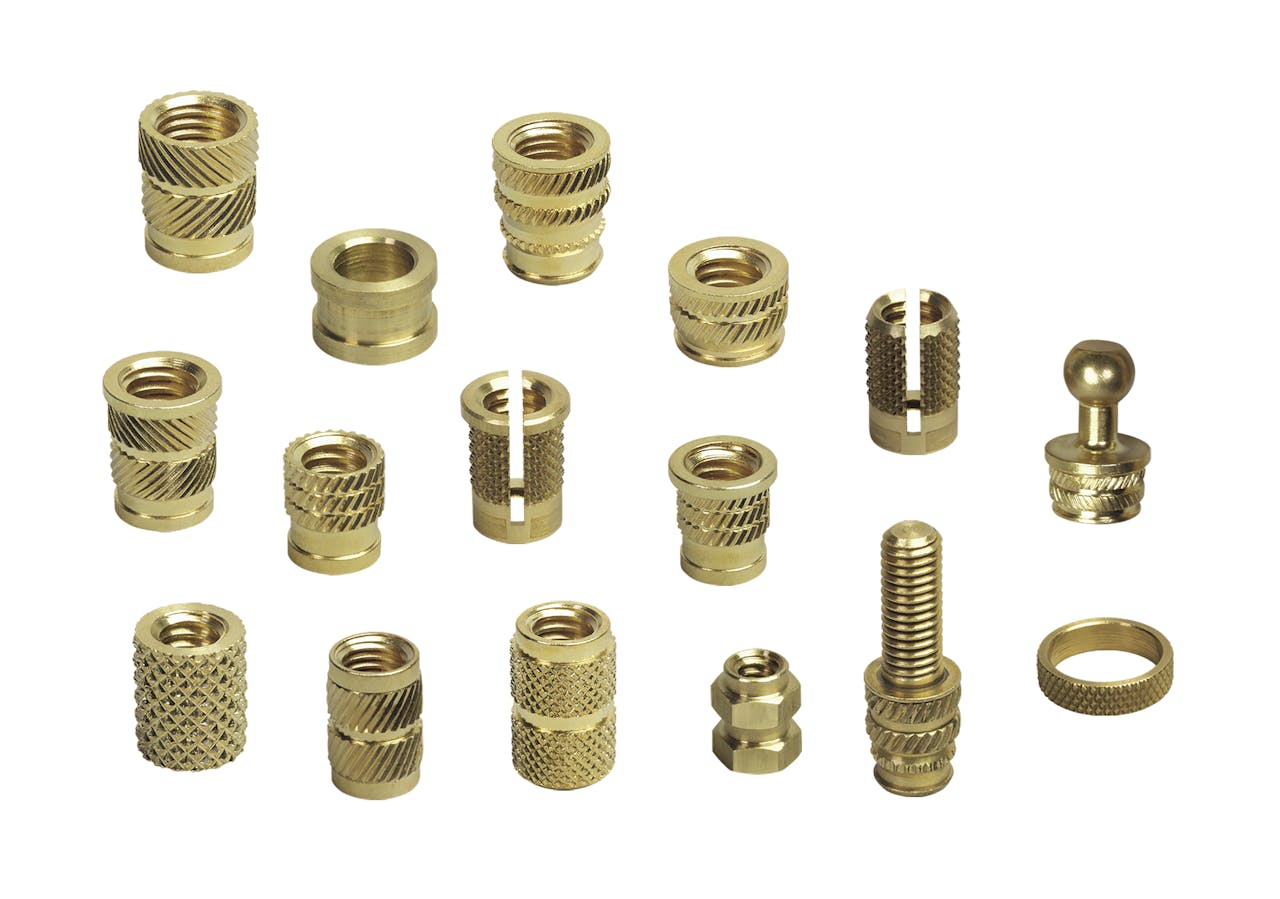
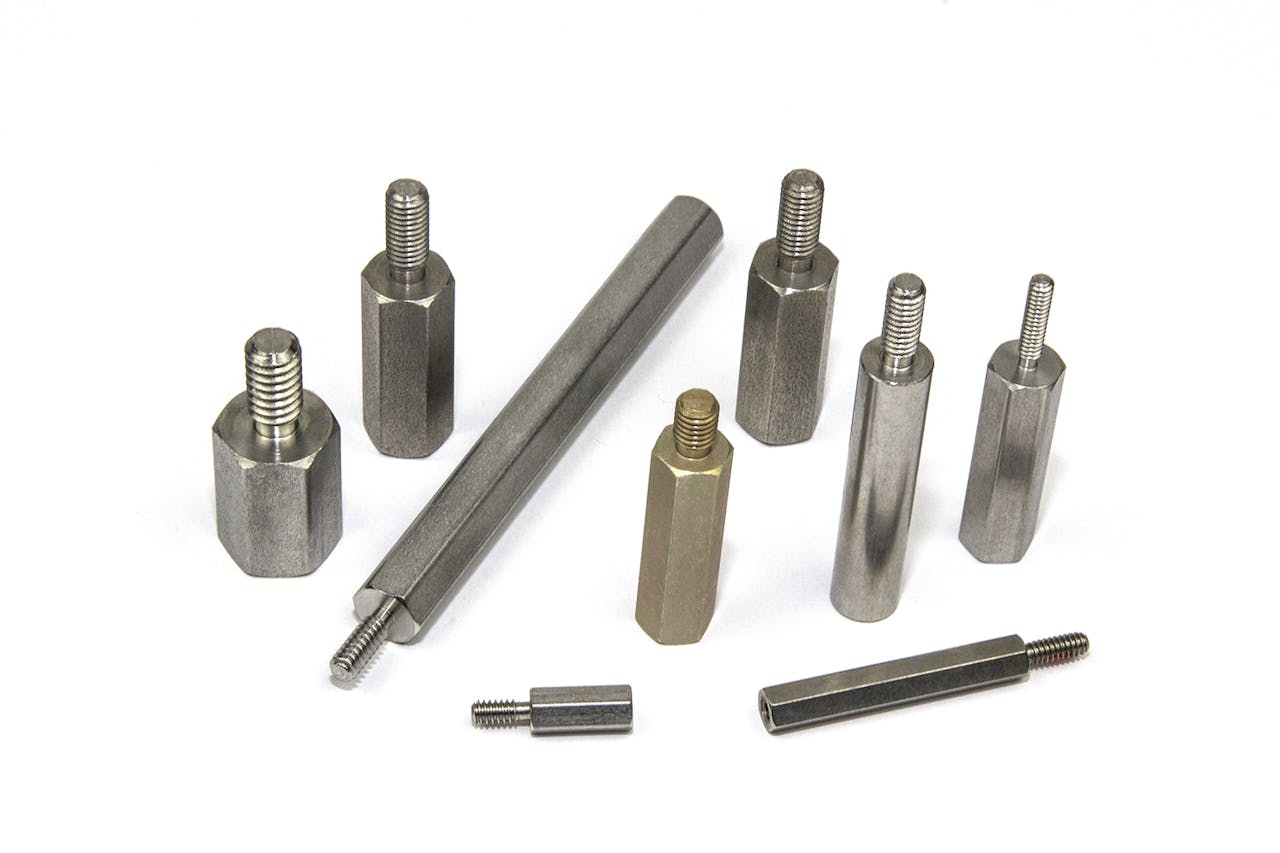
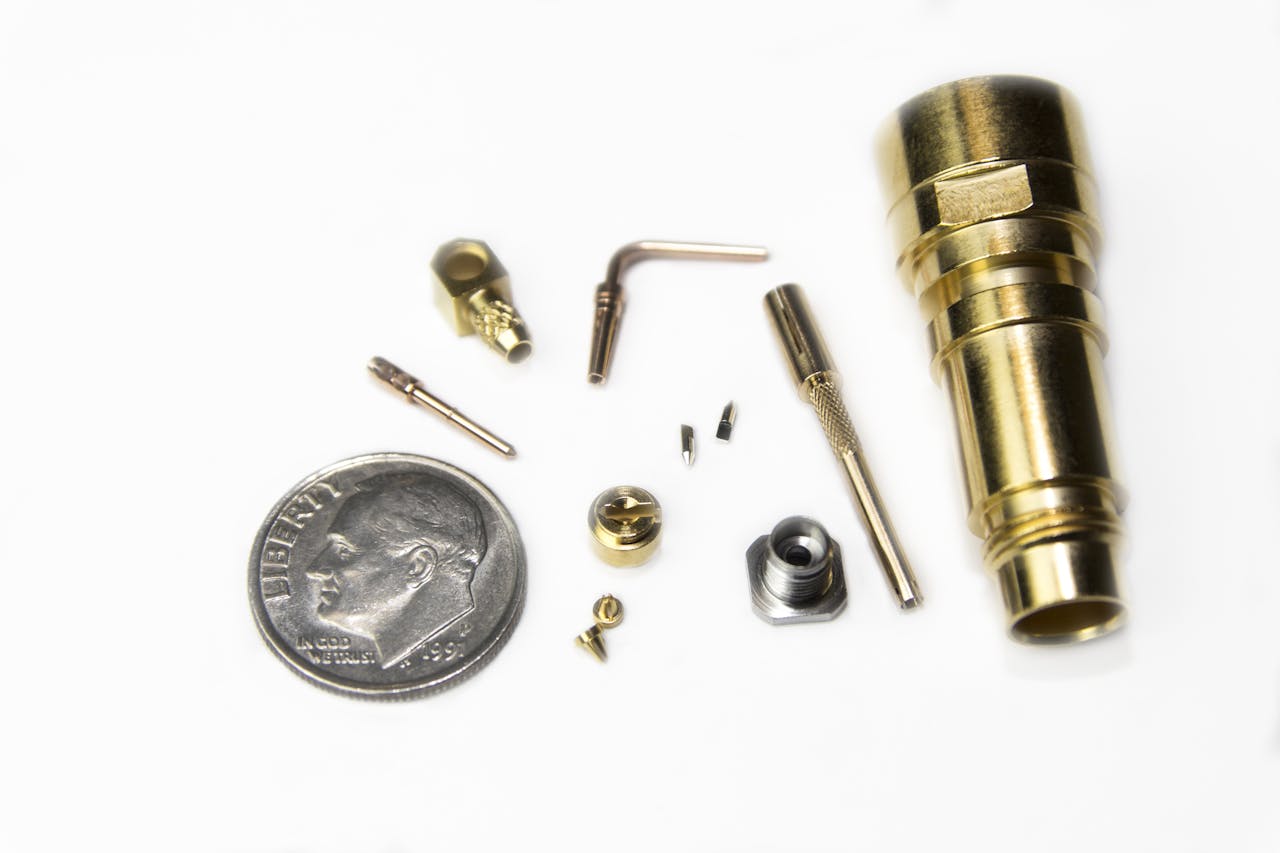
Tri-Star's
new catalog is now available, with updated information on
our complete line of Threaded Inserts, Precision Machined
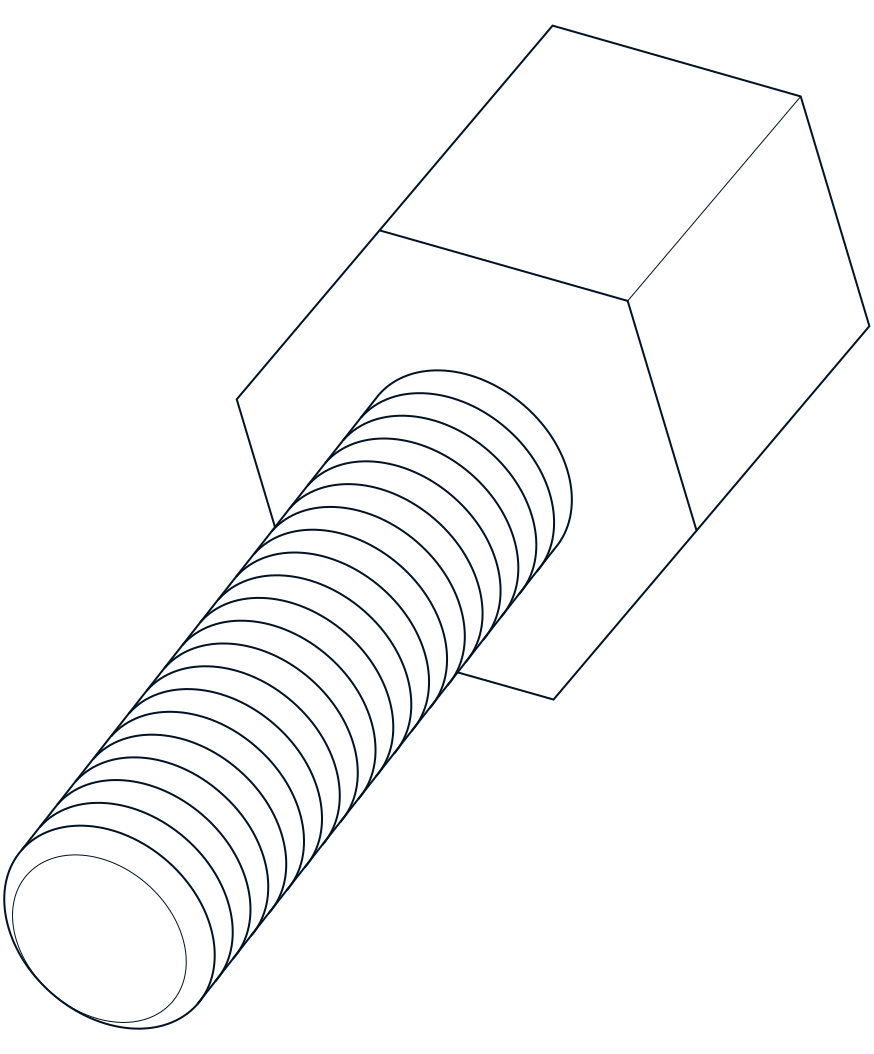
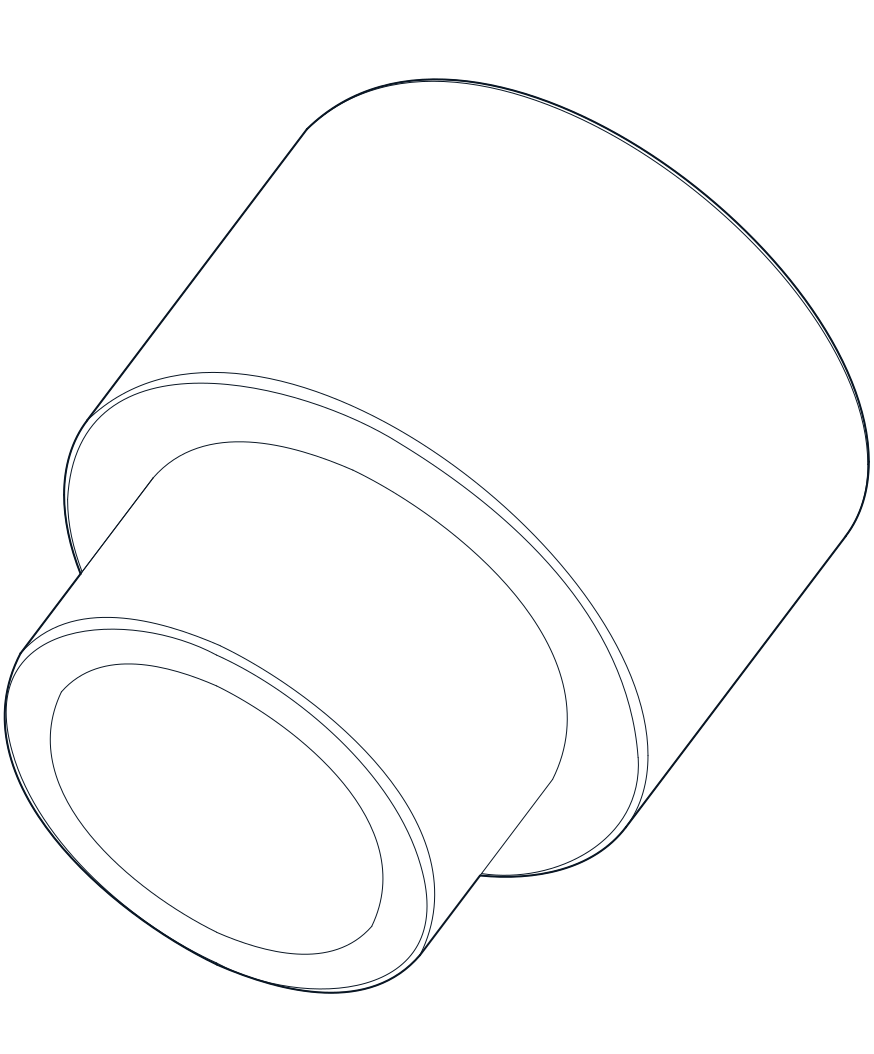
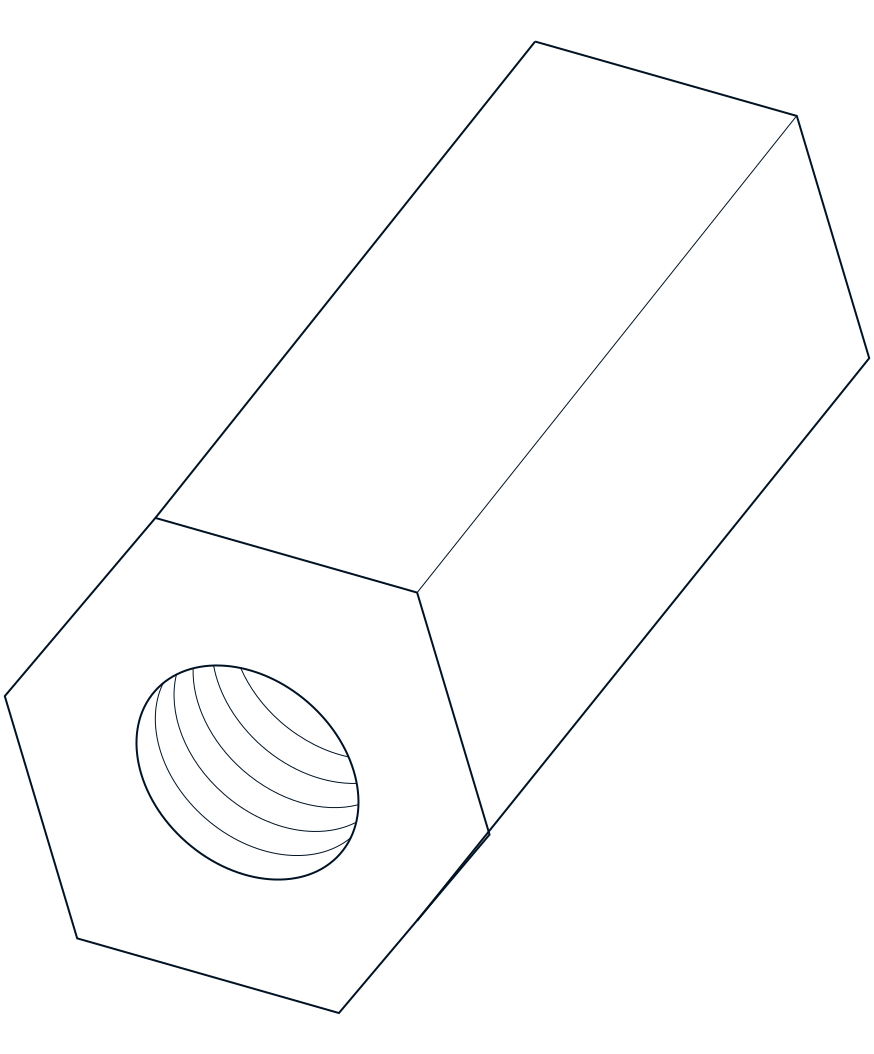
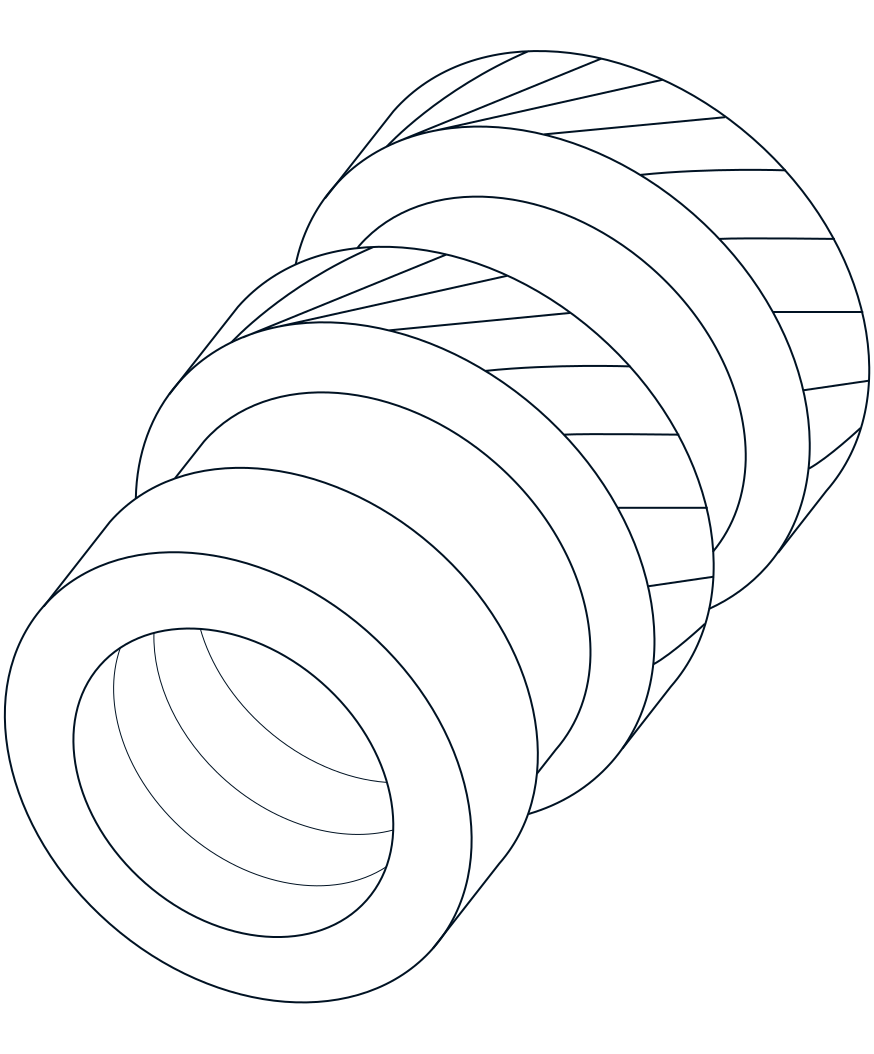
Products, Compression Limiters and Knurled Spacers. Click
here to download the catalog in PDF format (2.4mb). To
receive a copy through the mail, fill
out our online inquiry form or call us today at 860-828-7570. |
|
|
|
|
Tri-Star
Industries, Inc.
101 Massirio
Dr., Berlin, CT 06037 :: Tel 860-828-7570 :: Fax 860-828-7475
:: sales@tristar-inserts.com |
|
|
|